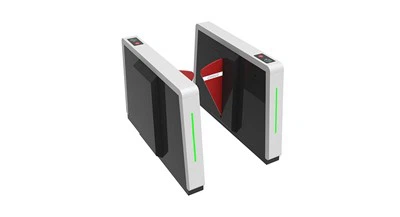
As a supplier of Swing Gate Waist Height Turnstiles, one question that often comes up from our clients is whether these turnstiles can be locked manually. This is a crucial inquiry, especially for those who are concerned about security and flexibility in different operational scenarios. In this blog post, we will delve into the technical aspects of manual locking for Swing Gate Waist Height Turnstiles, exploring its feasibility, benefits, and limitations.
Understanding Swing Gate Waist Height Turnstiles
Before we discuss manual locking, it's essential to understand what Swing Gate Waist Height Turnstiles are. These turnstiles are designed to control the flow of people in various settings, such as office buildings, schools, and public transportation hubs. They feature a waist - high gate that swings open to allow passage upon proper authorization. Our range of turnstiles, including the Cylindrical Type Security Half Height Glass Turnstile, Smarter High Glass Security Turnstiles, and Painting Access Control Speed Gate Turnstile, are built with high - quality materials and advanced technology to ensure reliability and security.
The Feasibility of Manual Locking
The answer to whether a Swing Gate Waist Height Turnstile can be locked manually is yes. Most modern turnstiles are equipped with a manual locking mechanism for several reasons. Firstly, in case of a power outage or a malfunction in the automated access control system, manual locking provides a backup security measure. Secondly, it allows for greater flexibility in managing access during special events or maintenance periods.
There are different ways to implement manual locking in Swing Gate Waist Height Turnstiles. One common method is through a physical key. A key - operated lock can be installed on the turnstile's control panel or directly on the gate. When the key is turned, it engages a locking mechanism that prevents the gate from swinging open. This is a simple and straightforward solution that has been used for many years.
Another approach is the use of a manual override switch. This switch can be located in a discreet and secure location, such as a security booth or a control room. When activated, the switch sends a signal to the turnstile's control system to lock the gate. This method is more convenient for security personnel as they can lock the turnstile without having to physically approach it.
Benefits of Manual Locking
The ability to lock a Swing Gate Waist Height Turnstile manually offers several benefits. One of the primary advantages is enhanced security. In an emergency situation, such as a fire or a security threat, manual locking can quickly restrict access to a particular area, preventing unauthorized entry and ensuring the safety of people inside.
Manual locking also provides flexibility in access management. For example, during off - hours or when a facility is closed, security personnel can manually lock all turnstiles to prevent any unauthorized entry. This is particularly useful for facilities that require strict access control, such as data centers or research laboratories.
Moreover, manual locking can be used for maintenance purposes. When technicians need to work on the turnstile or the access control system, they can manually lock the gate to prevent any accidental or unauthorized use during the maintenance period.


Limitations of Manual Locking
While manual locking is a useful feature, it also has some limitations. One of the main drawbacks is the potential for human error. If a security guard forgets to unlock the turnstile after an emergency or a maintenance period, it can cause inconvenience to authorized personnel. Additionally, if the key or the manual override switch is lost or misplaced, it can lead to difficulties in unlocking the turnstile.
Another limitation is the lack of real - time monitoring. Unlike automated access control systems that can record every entry and exit, manual locking does not provide detailed access logs. This can be a problem for facilities that require strict access auditing and reporting.
Considerations for Implementing Manual Locking
When considering implementing manual locking for Swing Gate Waist Height Turnstiles, there are several factors to take into account. Firstly, the location of the manual locking mechanism is crucial. It should be easily accessible to authorized personnel but also secure enough to prevent unauthorized use. For example, if a key - operated lock is used, the key should be kept in a secure place and only given to authorized individuals.
Secondly, training is essential. Security personnel and other relevant staff should be properly trained on how to use the manual locking mechanism. They should know when and how to lock and unlock the turnstile, as well as what to do in case of any problems.
Finally, it's important to integrate the manual locking feature with the overall access control system. This ensures that the manual locking mechanism works seamlessly with other security measures, such as surveillance cameras and alarm systems.
Conclusion
In conclusion, a Swing Gate Waist Height Turnstile can indeed be locked manually. This feature provides an additional layer of security and flexibility in access management. While it has some limitations, proper implementation and training can help to overcome these issues.
As a supplier of Swing Gate Waist Height Turnstiles, we understand the importance of providing reliable and secure access control solutions. Our turnstiles are designed with both automated and manual locking options to meet the diverse needs of our clients. If you are interested in learning more about our products or have any questions regarding manual locking or other features, please feel free to contact us for a detailed discussion and procurement negotiation.
References
- "Access Control Systems: Principles and Practices" by Richard A. Deal
- "Security and Loss Prevention for the Business" by Raymond C. McCrie