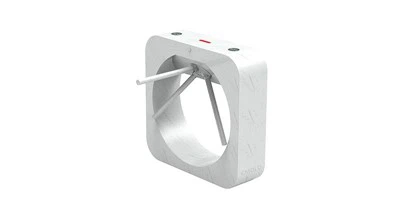
In the dynamic landscape of airport operations, the management of passengers with expired boarding passes is a critical challenge that demands sophisticated solutions. As a leading supplier of Airport Security Swing Turnstile E-gate, we understand the complexities involved in ensuring seamless passenger flow while maintaining the highest levels of security. This blog post delves into how our state-of-the-art e-gates handle passengers with expired boarding passes, offering insights into the technology, processes, and best practices that make our solutions indispensable in modern airports.
The Role of Airport Security Swing Turnstile E-gates
Airport security swing turnstile e-gates serve as the frontline defense in the boarding process, verifying passengers' identities and boarding pass validity. These automated gates are equipped with advanced sensors and software that can quickly and accurately read boarding passes, passports, and other travel documents. By integrating multiple verification methods, such as barcode scanning, RFID technology, and biometric authentication, our e-gates provide a robust and reliable solution for preventing unauthorized access to boarding areas.
Challenges Posed by Expired Boarding Passes
Expired boarding passes present a unique set of challenges for airport security. On one hand, they may indicate a simple oversight on the part of the passenger, such as forgetting to check the boarding pass expiration time. On the other hand, they could be a sign of more serious issues, such as a missed flight, a change in travel plans, or even an attempt to bypass security measures. Therefore, it is essential for airport security systems to be able to distinguish between legitimate and fraudulent cases of expired boarding passes.
How Our E-gates Detect Expired Boarding Passes
Our Airport Security Swing Turnstile E-gates are designed to detect expired boarding passes with a high degree of accuracy. When a passenger approaches the e-gate, the system first scans the barcode or RFID chip on the boarding pass. The scanned information is then compared with the airline's database in real-time to verify the pass's validity. If the boarding pass has expired, the system immediately alerts the security personnel and displays a clear message to the passenger.
In addition to barcode and RFID scanning, our e-gates can also be equipped with biometric authentication technologies, such as Face Recognition Fingerprint Airport Turnstile. Biometric data, such as facial features and fingerprints, provide an additional layer of security and can help to prevent fraud. By cross-referencing the biometric data with the passenger's travel documents, our e-gates can ensure that the person presenting the boarding pass is the rightful owner.
Handling Passengers with Expired Boarding Passes
Once an expired boarding pass is detected, our e-gates are programmed to follow a predefined set of procedures. In most cases, the system will display a message instructing the passenger to proceed to the nearest airline counter for assistance. At the same time, the system will notify the security personnel, who will be on standby to provide support and ensure that the situation is resolved in a timely and efficient manner.
In some cases, the passenger may have a legitimate reason for having an expired boarding pass, such as a flight delay or a missed connection. In these situations, our e-gates can be configured to allow the passenger to proceed through the gate after verifying their identity and obtaining the necessary authorization from the airline. This flexibility ensures that passengers are not unduly inconvenienced while still maintaining the integrity of the security process.
Integration with Airport Systems
Our Airport Security Swing Turnstile E-gates are designed to integrate seamlessly with other airport systems, such as the airline's reservation system, the airport's security management system, and the baggage handling system. This integration allows for real-time data sharing and enables the e-gates to make informed decisions based on the latest information. For example, if a flight is delayed, the e-gates can automatically update the boarding pass expiration times and allow passengers to board the flight without having to obtain a new boarding pass.
Benefits of Our E-gates
The use of our Airport Security Swing Turnstile E-gates offers several benefits for airports and passengers alike. For airports, our e-gates help to improve security, reduce wait times, and enhance the overall passenger experience. By automating the boarding process, our e-gates can significantly reduce the workload of security personnel, allowing them to focus on more critical tasks.
For passengers, our e-gates provide a convenient and hassle-free boarding experience. With faster and more accurate verification processes, passengers can spend less time waiting in line and more time enjoying their travels. In addition, the use of biometric authentication technologies, such as Face Recognition Fingerprint Airport Turnstile, enhances the security of the boarding process and provides passengers with greater peace of mind.
Conclusion
In conclusion, the management of passengers with expired boarding passes is a complex but essential task for airport security. Our Airport Security Swing Turnstile E-gates offer a comprehensive solution for detecting and handling expired boarding passes, ensuring the safety and security of passengers while maintaining the efficiency of the boarding process. By leveraging advanced technologies, such as barcode scanning, RFID, and biometric authentication, our e-gates provide a reliable and effective way to prevent unauthorized access to boarding areas.

If you are interested in learning more about our Airport Security Swing Turnstile E-gates or Face Recognition Fingerprint Airport Turnstile and how they can benefit your airport, please contact us today. Our team of experts will be happy to provide you with more information and assist you in finding the right solution for your needs.

References
- International Air Transport Association (IATA). (2023). Airport Security Manual.
- Federal Aviation Administration (FAA). (2023). Airport Security Regulations.
- European Union Aviation Safety Agency (EASA). (2023). Guidelines for Airport Security Systems.