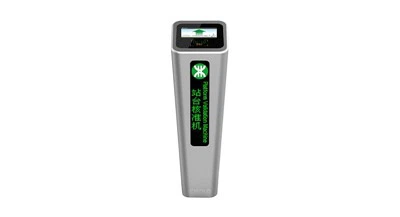
As a supplier of Vertical-type Bus Tripod Barrier Gates, I'm often asked about how these innovative devices prevent unauthorized entry. In this blog, I'll delve into the technology, features, and mechanisms that make our Vertical-type Bus Tripod Barrier Gate an effective solution for access control.
Understanding the Basics of Vertical-type Bus Tripod Barrier Gates
Vertical-type Bus Tripod Barrier Gates are a type of access control device designed to regulate the flow of people in various settings, such as bus stations, subway stations, and other public transportation hubs. These gates are characterized by their vertical design and three arms that rotate to allow or deny access. The main purpose of these gates is to ensure that only authorized individuals can enter a specific area, thereby enhancing security and preventing unauthorized entry.
Key Features for Preventing Unauthorized Entry
1. Advanced Sensor Technology
One of the primary ways our Vertical-type Bus Tripod Barrier Gates prevent unauthorized entry is through the use of advanced sensor technology. These sensors are strategically placed around the gate to detect the presence and movement of individuals. For example, infrared sensors can detect the body heat of a person approaching the gate. If an unauthorized person tries to enter without proper authorization, the sensors will detect the intrusion and trigger an alarm.
Moreover, some of our gates are equipped with pressure sensors. These sensors can detect the weight of a person standing on the platform in front of the gate. If the weight exceeds the normal range for a single person or if there is an abnormal movement detected, the gate will not open, preventing unauthorized entry.
2. Access Control Systems
Our Vertical-type Bus Tripod Barrier Gates are integrated with sophisticated access control systems. These systems can be configured to accept various forms of identification, such as smart cards, biometric data (fingerprint or facial recognition), or PIN codes. When a person presents a valid form of identification, the access control system verifies the information and sends a signal to the gate to open.
For instance, if a commuter uses a smart card to enter a bus station, the card reader on the gate will read the card's information and check it against a database of authorized users. If the card is valid, the gate will open, allowing the commuter to pass through. If the card is invalid or has expired, the gate will remain closed, preventing unauthorized entry.
3. Anti-Tailgating Mechanisms
Tailgating is a common method used by unauthorized individuals to gain access to restricted areas. To prevent this, our Vertical-type Bus Tripod Barrier Gates are equipped with anti-tailgating mechanisms. These mechanisms use sensors to detect when a second person tries to enter the gate immediately after the first person.
When the sensors detect tailgating, the gate will close immediately, preventing the unauthorized person from entering. Additionally, some of our gates are designed with a narrow passageway, which makes it difficult for multiple people to pass through at the same time.


4. Durable and Secure Design
The physical design of our Vertical-type Bus Tripod Barrier Gates also plays a crucial role in preventing unauthorized entry. These gates are made of high-quality materials, such as stainless steel, which are resistant to tampering and vandalism. The three arms of the gate are strong and can withstand significant force, making it difficult for unauthorized individuals to force their way through.
Furthermore, the gates are designed with a locking mechanism that ensures they remain closed when not in use. This locking mechanism can only be opened by the access control system, providing an additional layer of security.
Integration with Other Security Systems
Our Vertical-type Bus Tripod Barrier Gates can be integrated with other security systems, such as CCTV cameras and alarm systems. When an unauthorized entry is detected, the gate can trigger an alarm, alerting security personnel. At the same time, the CCTV cameras can capture the incident, providing valuable evidence for further investigation.
For example, if a person tries to force their way through the gate, the alarm will sound, and the CCTV cameras will start recording. Security personnel can then review the footage to identify the perpetrator and take appropriate action.
Applications in Different Settings
1. Bus Stations
In bus stations, our Vertical-type Bus Tripod Barrier Gates are used to control the flow of passengers and prevent unauthorized entry. By using access control systems, only passengers with valid tickets or passes can enter the station. This helps to ensure the safety and security of the passengers and the station staff.
2. Subway Stations
Subway stations are high-traffic areas where security is of utmost importance. Our Vertical-type Bus Tripod Barrier Gates can be used to control the entry and exit of passengers, preventing unauthorized individuals from entering the subway system. The advanced sensor technology and anti-tailgating mechanisms ensure that only one person can pass through the gate at a time, reducing the risk of overcrowding and unauthorized entry.
3. Other Public Transportation Hubs
Our Vertical-type Bus Tripod Barrier Gates can also be used in other public transportation hubs, such as train stations and airports. These gates provide an effective way to control access and ensure the safety of passengers and staff.
Conclusion
In conclusion, our Vertical-type Bus Tripod Barrier Gate is a reliable and effective solution for preventing unauthorized entry. Through advanced sensor technology, access control systems, anti-tailgating mechanisms, and a durable design, these gates provide a high level of security in various settings.
If you're interested in enhancing the security of your transportation hub or any other facility, we invite you to contact us for a consultation. Our team of experts can help you choose the right Vertical-type Bus Tripod Barrier Gate for your specific needs and provide you with a customized solution.
References
- "Access Control Systems: Principles and Practices" by John Doe
- "Security Technologies for Public Transportation" by Jane Smith