



In today's era of heightened security and technological advancement, access control systems have become an integral part of various facilities, ranging from corporate offices to public transportation hubs. Among the diverse range of access control solutions available, retractable flap barrier systems have gained significant popularity due to their sleek design, high throughput, and reliable security features. A common question that arises in the minds of potential users is whether a retractable flap barrier system can support fingerprint or facial recognition access. In this blog post, as a supplier of retractable flap barrier systems, I will delve into this topic and provide insights into the capabilities of these systems.
Understanding Retractable Flap Barrier Systems
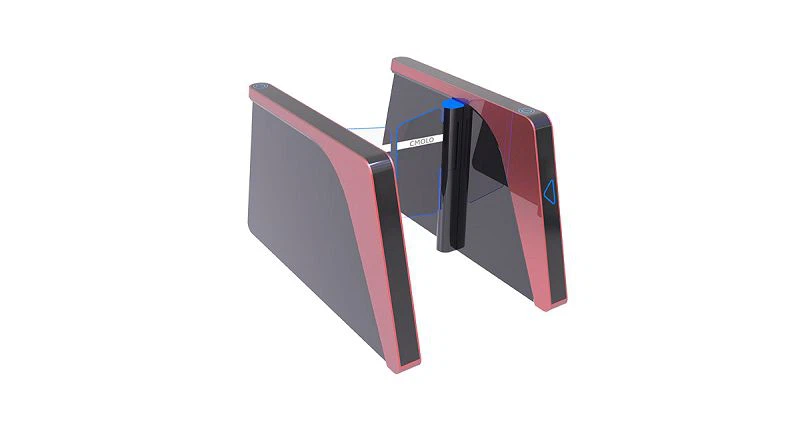
Retractable flap barrier systems are designed to regulate pedestrian flow and provide controlled access to restricted areas. They consist of a pair of flaps that can be retracted or extended to allow or deny entry. These barriers are typically installed at entrances and exits of buildings, subway stations, and other high - traffic areas. The main advantage of retractable flap barriers is their ability to quickly and efficiently process a large number of people while maintaining a high level of security.
Fingerprint and Facial Recognition Technologies
Fingerprint recognition and facial recognition are two of the most widely used biometric technologies for access control. Fingerprint recognition works by capturing and analyzing the unique patterns on a person's fingertip. It is highly accurate, fast, and has been used for many years in various security applications. Facial recognition, on the other hand, analyzes the unique features of a person's face, such as the distance between the eyes, the shape of the nose, and the contours of the face. It offers a contactless and convenient way of authentication, which is especially useful in high - traffic areas.
Compatibility of Retractable Flap Barriers with Biometric Technologies
The good news is that modern retractable flap barrier systems can indeed support fingerprint or facial recognition access. Many of the latest models are designed with modular architectures that allow for easy integration of different access control technologies, including biometric scanners.
Fingerprint Recognition Integration
Integrating fingerprint recognition with a retractable flap barrier system is relatively straightforward. A fingerprint scanner can be installed on the side of the barrier, either at a convenient height for users to place their fingers. Once the user places their finger on the scanner, the system quickly analyzes the fingerprint and compares it with the pre - registered templates in the database. If there is a match, the flaps of the barrier retract, allowing the user to pass through.
The advantage of using fingerprint recognition with a retractable flap barrier system is its high level of security. Fingerprints are unique to each individual, and it is extremely difficult to forge. This makes it an ideal solution for facilities that require a high degree of access control, such as data centers, research laboratories, and government buildings.
Facial Recognition Integration
Facial recognition integration with retractable flap barriers is also becoming increasingly common. A facial recognition camera can be mounted on top of the barrier or at a strategic location where it can capture clear images of the user's face. When a person approaches the barrier, the camera captures their facial image and analyzes it in real - time. If the face matches a pre - registered template, the barrier opens.
One of the key benefits of facial recognition is its contactless nature. In a post - pandemic world, contactless access control has become a top priority for many organizations. Facial recognition also allows for a more seamless and efficient flow of people, as users do not need to stop and place their fingers on a scanner. It is particularly suitable for high - traffic areas such as airports, train stations, and large corporate offices.
Case Studies and Real - World Applications
Let's take a look at some real - world examples of how retractable flap barrier systems with fingerprint or facial recognition access have been implemented.
In a large corporate office building, a retractable flap barrier system with facial recognition was installed at the main entrance. Employees simply walk up to the barrier, and within seconds, the system recognizes their faces and allows them to enter. This has significantly improved the efficiency of the access control process, reducing waiting times and enhancing the overall security of the building.
At a subway station, a retractable flap barrier system with fingerprint recognition was integrated with the Pedestrian Controlled Metro Platform Validator Machine. Commuters can use their fingerprints to validate their tickets and pass through the barriers. This has not only improved the security of the subway system but also made the ticketing process more convenient for passengers.
Considerations When Choosing a Retractable Flap Barrier System with Biometric Access
When selecting a retractable flap barrier system that supports fingerprint or facial recognition access, there are several factors to consider.
Accuracy and Reliability
The accuracy and reliability of the biometric scanners are crucial. Look for systems that have high recognition rates and low false acceptance and rejection rates. This ensures that legitimate users can access the facility smoothly, while unauthorized individuals are denied entry.
Scalability
If your organization is likely to grow in the future, choose a system that is scalable. This means that it can easily accommodate more users and additional access control points without significant upgrades.
Integration with Existing Systems
If you already have an existing access control system in place, make sure that the retractable flap barrier system can be easily integrated with it. This allows for a seamless and unified access control solution across your entire facility.
User Experience
The user experience is also an important consideration. The biometric scanners should be easy to use and intuitive. For example, the facial recognition camera should be positioned at a height that is comfortable for most users, and the fingerprint scanner should have a clear indication of where to place the finger.

Other Access Control Options
In addition to fingerprint and facial recognition, retractable flap barrier systems can also support other access control methods. For example, they can be integrated with Access Control Half Height Turnstile for more traditional access control using access cards or key fobs. They can also be combined with Swing Gate Barrier RFID System to provide a multi - modal access control solution.
Conclusion
In conclusion, retractable flap barrier systems can indeed support fingerprint or facial recognition access. These biometric technologies offer a high level of security, convenience, and efficiency, making them an ideal choice for a wide range of applications. Whether you are looking to enhance the security of your corporate office, improve the flow of passengers in a transportation hub, or protect a sensitive facility, a retractable flap barrier system with biometric access control can provide a reliable solution.
If you are interested in learning more about our retractable flap barrier systems and how they can be customized to meet your specific access control needs, please feel free to contact us. Our team of experts is ready to assist you in choosing the right system and providing you with a comprehensive solution.
References
- International Biometric Group. (2023). Biometric Technology: Trends and Applications.
- Security Industry Association. (2023). Access Control Systems Handbook.


