



Double gate turnstiles are a crucial part of access control systems, especially in high - traffic and high - security areas such as airports, corporate offices, and stadiums. As a double gate turnstiles supplier, we are constantly delving into how these turnstiles communicate effectively with the central control system. This communication is vital as it enables seamless and efficient management of access control, real - time monitoring, and the collection of valuable data.
1. Communication Protocols
The first step in establishing communication between double gate turnstiles and the central control system is through the use of appropriate communication protocols. These protocols act as a set of rules that govern how data is transmitted and received between the two endpoints.
One of the most commonly used protocols is Ethernet. Ethernet provides high - speed and reliable data transfer, making it ideal for real - time communication. With Ethernet, double gate turnstiles can quickly send information such as access events (e.g., successful entry, denied access), the status of the gates (open or closed), and any error messages to the central control system. Moreover, the central control system can also send commands back to the turnstiles, such as opening or closing the gates, modifying access permissions, etc.
Another important protocol is Modbus. Modbus is a serial communication protocol that has been widely adopted in the industrial automation field. It allows for simple and cost - effective communication between devices. Double gate turnstiles using Modbus can communicate with the central control system over a serial link, transmitting data in a well - defined format. This protocol is particularly useful in situations where the distance between the turnstiles and the control system is relatively short, and a high - speed connection is not necessary.
In addition to these, some turnstiles also support Wi - Fi communication. Wi - Fi offers the advantage of wireless connectivity, which simplifies the installation process. Turnstiles can be easily placed in various locations without the need for extensive cabling. However, Wi - Fi communication may be affected by interference from other wireless devices, so proper network design and optimization are required.
2. Data Transmission
Once the communication protocol is established, the next step is to understand how data is transmitted between the double gate turnstiles and the central control system.
The double gate turnstiles collect various types of data continuously. For example, they monitor the status of sensors installed on the gates to detect the presence of people, the opening and closing of the gate leaves, and any abnormal situations such as forced entry attempts. All this data needs to be transmitted to the central control system in a timely manner.

The data is usually packaged into data frames according to the rules of the communication protocol. Each data frame contains a header, which includes information such as the source and destination addresses, the type of data, and a sequence number. The payload of the data frame contains the actual information collected by the turnstiles, such as access event details.
When transmitting data, the turnstiles use reliable methods to ensure that the data arrives at the central control system intact. For Ethernet - based communication, the Transmission Control Protocol (TCP) is often used. TCP provides reliable, ordered, and error - checked delivery of a stream of bytes between applications running on hosts communicating via an IP network. This means that even if there are network glitches or data packets are lost, TCP will re - transmit the lost packets to ensure that all data is received correctly by the central control system.
In the case of Modbus communication, the data is sent in a master - slave mode. The central control system acts as the master, and the double gate turnstiles act as slaves. The master sends requests to the slaves to read or write data, and the slaves respond accordingly. This ensures that the data transfer is controlled and efficient.
3. Central Control System Functionality
The central control system is the brain of the access control network. It receives data from the double gate turnstiles and processes it to make informed decisions.
When the central control system receives access event data from the turnstiles, it can verify the authenticity of the access attempt. For example, if the turnstiles are equipped with card readers or biometric scanners, the central control system can check the access credentials against the pre - stored database. If the credentials are valid, the central control system can send a command back to the turnstiles to open the gates.
In addition to access control, the central control system can also perform long - term data analysis. It can generate reports on access patterns, peak traffic hours, and the number of successful and failed access attempts. This valuable information can be used for security management, facility planning, and resource allocation.
For example, if the data analysis shows that there is a high volume of traffic during certain hours at a particular entrance, the management can decide to add more security personnel or adjust the access rules to ensure smooth and safe entry.
4. Integration with Other Systems
Double gate turnstiles and their central control systems often need to be integrated with other security and management systems. This integration enhances the overall security and efficiency of the facility.
One common integration is with the surveillance camera system. When an access event occurs at the turnstiles, the central control system can trigger the corresponding surveillance cameras to start recording. This provides a visual record of the access events, which can be used for post - event analysis and investigation in case of security incidents.
Another important integration is with the alarm system. If the turnstiles detect a forced entry or other security violations, the central control system can send a signal to the alarm system to activate an alarm. This immediate response can help prevent unauthorized access and protect the safety of the facility.
5. Product Examples and Benefits
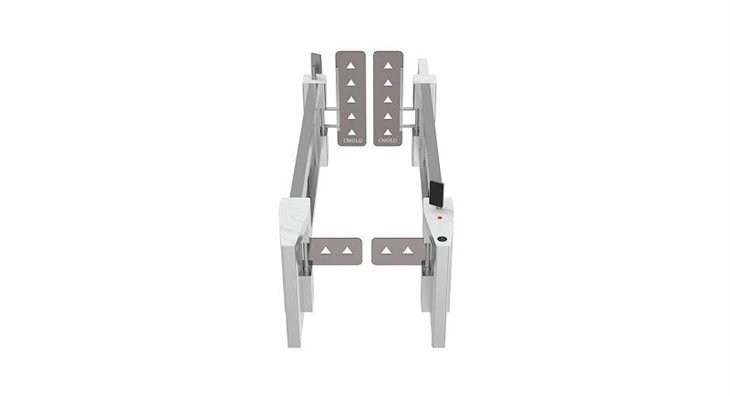
As a double gate turnstiles supplier, we offer a range of products with advanced communication capabilities. For example, our Airport Security Swing Turnstile E - gate is designed specifically for airport security applications. It can communicate with the airport's central control system seamlessly, providing real - time access control and monitoring. The turnstile is equipped with high - precision sensors and advanced authentication technologies such as card readers and biometric scanners, ensuring the security of the airport environment.
Our Face Recognition Fingerprint Airport Turnstile is another great example. It combines face recognition and fingerprint authentication technologies, providing an extra layer of security. The turnstile can communicate with the central control system over multiple communication protocols, ensuring reliable data transfer and efficient operation.
These products offer several benefits. Firstly, they enhance security by accurately controlling access and detecting unauthorized entry. Secondly, they improve operational efficiency by automating the entry process and reducing the need for manual intervention. Finally, they provide valuable data for management, allowing for better decision - making.
If you are looking for high - quality double gate turnstiles and reliable communication solutions with the central control system, we are here to help. Our team of experts can provide customized solutions based on your specific requirements. Whether you are an airport operator, a corporate office manager, or a stadium administrator, we have the right products and services for you. Contact us to discuss your procurement needs and start a successful partnership.
References
- "Industrial Communication Technology Handbook", Edited by Thomas J. Harrison.
- "Networking Basics: A Concise Introduction to Data Communication and Networking", by Michael J. Case.


