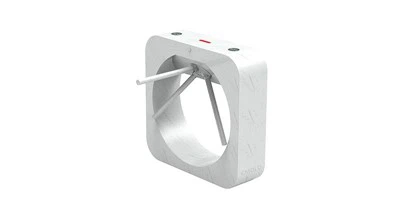
An Automatic Security Swing Turnstile is a crucial component in modern access control systems, offering both security and convenience in various settings such as office buildings, airports, and subway stations. As a leading supplier of Automatic Security Swing Turnstiles, we understand the importance of providing a wide range of authentication methods to meet the diverse needs of our customers. In this blog post, we will explore the different types of authentication methods supported by our Automatic Security Swing Turnstiles.
1. Card-based Authentication
Card-based authentication is one of the most common and traditional methods used in access control systems. Our Automatic Security Swing Turnstiles support various types of cards, including proximity cards, smart cards, and magnetic stripe cards.
- Proximity Cards: These cards use radio frequency identification (RFID) technology to communicate with the turnstile's card reader. When a valid proximity card is presented within a certain range of the reader, the turnstile will recognize it and grant access. Proximity cards are convenient because they do not require physical contact with the reader, making them quick and easy to use.
- Smart Cards: Smart cards are more advanced than proximity cards as they contain a microprocessor and memory chip. They can store more information, such as user credentials, access permissions, and transaction history. Smart cards can be used in conjunction with a PIN or other authentication factors for enhanced security. Our turnstiles can support both contact and contactless smart cards, providing flexibility for different user preferences.
- Magnetic Stripe Cards: Although magnetic stripe cards are becoming less popular due to their susceptibility to wear and tear and security vulnerabilities, they are still widely used in some applications. Our Automatic Security Swing Turnstiles can read magnetic stripe cards, allowing customers to continue using their existing card systems if needed.
2. Biometric Authentication
Biometric authentication methods are becoming increasingly popular due to their high level of security and convenience. Our Automatic Security Swing Turnstiles support several biometric authentication options, including fingerprint recognition, facial recognition, and iris recognition.
- Fingerprint Recognition: Fingerprint recognition technology uses the unique patterns on a person's fingertips to verify their identity. When a user places their finger on the fingerprint scanner, the turnstile will compare the scanned fingerprint with the pre-registered template in its database. If there is a match, the turnstile will grant access. Fingerprint recognition is fast, accurate, and difficult to forge, making it a reliable authentication method.
- Facial Recognition: Facial recognition technology analyzes the unique features of a person's face, such as the shape of the eyes, nose, and mouth, to identify them. Our turnstiles are equipped with high-resolution cameras and advanced facial recognition algorithms that can quickly and accurately recognize faces in various lighting conditions. Facial recognition is convenient because it does not require the user to carry any physical tokens, such as cards or keys.
- Iris Recognition: Iris recognition technology uses the unique patterns in a person's iris to verify their identity. It is considered one of the most accurate and secure biometric authentication methods available. Our Automatic Security Swing Turnstiles can support iris recognition, providing an extra layer of security for high-security areas.
3. PIN-based Authentication
PIN-based authentication requires users to enter a personal identification number (PIN) on a keypad to gain access. This method is simple and easy to use, but it may not provide the same level of security as biometric or card-based methods. However, PIN-based authentication can be used in conjunction with other authentication factors, such as a card or biometric scan, to enhance security.
Our turnstiles are equipped with a numeric keypad that allows users to enter their PINs. The keypad can be customized to support different PIN lengths and formats. Additionally, the turnstile can be configured to require a PIN only under certain conditions, such as during specific times of the day or in certain areas of the facility.
4. Mobile-based Authentication
With the increasing popularity of smartphones, mobile-based authentication has become a convenient and secure way to access buildings and facilities. Our Automatic Security Swing Turnstiles support mobile-based authentication methods, including QR code scanning, Bluetooth pairing, and mobile wallet integration.
- QR Code Scanning: Users can generate a QR code on their smartphones using a dedicated app. When they approach the turnstile, they simply scan the QR code using the turnstile's built-in QR code scanner. The turnstile will verify the QR code and grant access if it is valid. QR code scanning is convenient because it does not require the user to carry any physical tokens, and it can be easily updated and managed.
- Bluetooth Pairing: Our turnstiles can be paired with smartphones using Bluetooth technology. When a user with a paired smartphone approaches the turnstile, the turnstile will detect the smartphone's presence and automatically grant access if the user's credentials are valid. Bluetooth pairing is a seamless and convenient way to access buildings, as the user does not need to take out their phone or perform any additional actions.
- Mobile Wallet Integration: Some smartphones support mobile wallet applications, such as Apple Pay or Google Pay. Our turnstiles can be integrated with these mobile wallet applications, allowing users to use their smartphones as a form of access credential. When a user approaches the turnstile, they simply hold their smartphone near the turnstile's card reader, and the turnstile will verify the mobile wallet payment and grant access if it is valid.
5. Multi-factor Authentication
To provide the highest level of security, our Automatic Security Swing Turnstiles support multi-factor authentication. Multi-factor authentication combines two or more authentication methods, such as a card and a PIN, or a biometric scan and a mobile credential, to verify a user's identity. By using multiple factors, multi-factor authentication significantly reduces the risk of unauthorized access.
For example, a user may need to present a proximity card and enter a PIN to gain access to a secure area. Or, they may need to perform a fingerprint scan and scan a QR code on their smartphone. Our turnstiles can be configured to support a wide range of multi-factor authentication combinations, allowing customers to customize the security level based on their specific needs.
Conclusion
In conclusion, our Automatic Security Swing Turnstiles support a wide range of authentication methods, including card-based, biometric, PIN-based, mobile-based, and multi-factor authentication. By offering these diverse authentication options, we can meet the different security requirements and user preferences of our customers. Whether you need a high-security solution for a government facility or a convenient access control system for an office building, our turnstiles can provide the right authentication method for you.
If you are interested in learning more about our Automatic Security Swing Turnstiles and the authentication methods they support, or if you would like to discuss your specific access control needs, please feel free to contact us for a consultation. We are committed to providing the best solutions and services to help you enhance the security and efficiency of your facility.
For more information about our other turnstile products, you can visit the following links:


- Retractable Flap Barrier System
- Automatic Pedestrian Speed Lanes
- Slim Automatic Speed Gate Turnstile System
References
- "Access Control Systems: A Comprehensive Guide." Security Magazine.
- "Biometric Authentication Technologies: An Overview." IEEE Transactions on Biometrics, Behavior, and Identity Science.
- "Mobile Authentication: Trends and Challenges." Journal of Information Security and Applications.