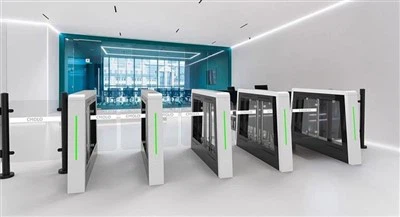
1, Technical principle: Collaboration of millisecond level recognition and security verification
The core of QR code scanning entry for turnstiles lies in the dual wheel drive of "fast identification+security verification". Its technical implementation involves three key modules:
High precision scanning engine
The cutting-edge gate adopts a million pixel camera and an infrared auxiliary lighting system, which can quickly recognize paper QR codes and electronic screen QR codes (such as mobile phone dynamic codes) within 0.2 seconds. For example, in the application of a certain brand of turnstiles at the Dongguan Taiwan International Fair, the success rate of scanning codes was increased to 99.97% by optimizing optical sensors and decoding algorithms, and it can still work stably even in strong light or screen reflection environments. In addition, some turnstiles support multi code parallel recognition, which can process multiple QR codes simultaneously, further reducing queuing time.
Dynamic permission verification
After scanning the code, the gate needs to interact with the backend system in real time to verify the validity, timeliness, and user permissions of the QR code. For example, in a movie theater setting, the gate is connected to the ticketing system through an API interface to automatically verify the venue, seat information, and anti-counterfeiting identification of electronic tickets; In supermarket export management, the gate is linked with the membership system to identify the member's identity and automatically deduct fees. To prevent QR code theft, some systems use dynamic encryption technology to generate new codes every minute to ensure security.
Security protection mechanism
The rotary brake is equipped with anti pinch grating, anti-collision sensor and emergency braking system. When obstacles or abnormal impacts are detected, the brake arm immediately stops moving and retracts. For example, a certain type of gate can withstand an impact force of 500kg without deformation during pressure testing, while also supporting the function of power-off and pole dropping, meeting fire safety requirements. In addition, the gate can also integrate a facial recognition module, which uses "QR code+face" dual factor verification to prevent behaviors such as proxy brushing and ticket evasion.
2, System architecture: end-to-end optimization from hardware to cloud
The implementation of QR code fast entry relies on the integrated architecture of "end edge management cloud":
Terminal device layer
As a terminal, the rotary gate integrates a scanning module, control motherboard, motor drive, and communication module. For example, a certain brand of gate adopts ARM Cortex-A53 processor, combined with Linux embedded system, to achieve low-power and high stability operation. At the same time, the gate supports multi protocol communication such as RS485, TCP/IP, Wi Fi 6, etc., and can seamlessly integrate with access control systems, payment terminals, monitoring cameras, and other devices.
Edge computing layer
Deploy edge servers locally to handle tasks with high real-time requirements, such as QR code decoding, permission verification, and gate status monitoring. For example, in large supermarkets, edge servers can manage 50 gates simultaneously, controlling data transmission latency within 50ms to ensure smooth traffic.
Cloud management layer
The cloud platform is responsible for user data storage, permission management, traffic statistics, and remote operation and maintenance. For example, through big data analysis, managers can view real-time indicators such as passenger flow and gate failure rate at different time periods, optimize scheduling and equipment maintenance plans. In addition, the cloud also supports dynamic permission issuance, such as temporarily opening gate channels to cope with sudden passenger flow.
3, Scenario adaptation: Diversified practices from retail to exhibitions
The QR code fast entry technology has been widely used in supermarkets, cinemas, exhibitions, sports venues and other scenarios, and its adaptability is reflected in the following aspects:
Supermarket export management
In large chain supermarkets, the turnstile is linked with the self checkout system. After customers complete payment, the turnstile automatically unlocks and records the departure time. For example, after deploying turnstiles in an international chain supermarket, the export congestion rate decreased by 65% and the cost of manual inspection decreased by 80%. At the same time, the gate supports a wide channel design that can accommodate shopping carts, meeting the needs of fresh supermarkets and warehouse style stores.
Smart exhibitions and events
At major exhibitions such as the Dongguan Taiwan International Fair, the turnstile verifies electronic tickets by scanning codes, and combines heat map analysis to help the organizers optimize booth layout and flow design. In addition, the gate can also be linked with the interactive gaming system, and after the audience scans the code to sign in, they can participate in activities such as lottery and answering questions, enhancing their sense of participation. For example, a certain exhibition discovered through QR code scanning data at the gate that the weekend afternoon foot traffic was concentrated in the technology exhibition area, which was expanded by 30% the following year.
Sports venues and entertainment venues
In scenarios such as basketball courts and concert venues, turnstiles support multi code verification, such as simultaneously recognizing ticket QR codes and member identity codes, to achieve differentiated services. For example, a high-end sports arena provides exclusive gateway channels for VIP members. Through facial recognition and QR code dual verification, the member's travel time is shortened to 1 second, and the repurchase rate is increased by 15%.
Swing Gate Waist Height Turnstile


WhatsApp : 0086-15999546575
Skype : cmolo.joy
Email : contact@cmolo.com
Tel : 0086-15999546575
CMOLO Industrial Park,NO. 144-1, Hengping Road,Henggang Street, Longgang District, Shenzhen City, China