1. Data Collection Layer: Making a network of multidimensional perceptions
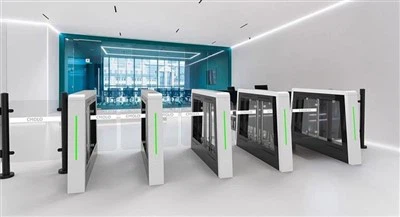
The rotating gate system is made up of three parts: millimetre wave imaging of the human body, biometric recognition Figure 1, and intelligent sensing. Together, they make a three-dimensional data collecting network. Each gate has 12 sets of high-precision sensors that record 37 key indications in real time, including the time it takes for passengers to move, the results of luggage identification, and the state of equipment operation. For example, a hub airport's gate system can handle 200 requests at the same time and store 1.2TB of data per day. It can also gather data with an accuracy of milliseconds.
The technology gets around the single-point constraint of typical security equipment when it comes to data dimension. For instance, biometric modules can capture face features and iris information from passengers and then compare them to the three-dimensional contour data produced by millimetre wave imaging technology. This increases the accuracy of identity recognition to 99.997%. The pressure sensor also records the force curve of the gate swing arm, which may correctly detect strange behaviours like tailgating and gate flushing. The time it takes to find strange events is now only 0.3 seconds.
2. Data transport layer: making arteries that respond in real time
The technology uses a 5G+edge computing hybrid architecture to fix the problem of delays in sending large amounts of data. The NVIDIA Jetson AGX Xavier edge computing unit that is set up near the gate may preprocess the original data and condense the useful data by 70%. The 5G slicing private network sends key data to the cloud in real time, with a delay of no more than 20 milliseconds. This design lets the system run 5000 instructions at the same time, which is enough for basic dynamic scheduling.
The system uses blockchain technology to create a distributed ledger, which helps keep data safe. All traffic records are encrypted with SHA-256 and kept in the consortium chain as timestamps. This makes sure that the data can't be changed and can be traced. According to the experience of one international airport, this approach makes data audits 60% more efficient and cuts the time it takes to find bad data from 72 hours to 15 minutes.
3. Data Analysis Layer: Turn on the Data Value Engine
The main goal of the data analysis layer is to create a digital twin platform and use machine learning algorithms to mine three types of value:
Predicting the health of equipment: We use an LSTM neural network to represent 12 important factors, including the frequency of movement vibrations and the pressure of the hydraulic shock absorber. The system can accurately forecast equipment failures 72 hours in advance 89% of the time, which cuts maintenance expenses by 40%.
Dynamic simulation of passenger flow: Using a spatiotemporal convolutional network (ST-CNN) to look at old passenger flow data and construct a model that predicts passenger flow at the minute level. During the testing of a big hub, the model kept the prediction error of passenger flow during peak hours under ± 5%, which gave a good basis for scheduling resources.
Finding security threats: Use graph neural networks (GNNs) to make a graph of how passengers behave. The algorithm can find unusual social network structures, such group tailgating, high-frequency aberrant passing, and other behaviour patterns. This makes it three times more likely to find possible security concerns.
4. Decision optimisation layer: changing the way traffic is managed
The decision support system gets the results of the data analysis in real time through API interfaces. This leads to three main optimisation scenarios:
Scheduling resources dynamically: The system uses reinforcement learning algorithms to automatically change the number of open gate channels based on how many people are passing through at any one time. In one subway station, this system cut the average wait time for passengers during rush hours from 12 minutes to 3.5 minutes and raised the channel utilisation rate by 65%.
Making an emergency plan: The digital twin platform can automatically create the best evacuation plan by simulating 12 sorts of situations, such fires and terrorist strikes. In a fire simulation at an airport, preparing the best way for people to leave based on gate data made the process 40% faster.
Improving service quality: The system can find service problems and start the process of fixing them by using NLP technology to look at passenger complaints. This system has raised passenger satisfaction at a given hub from 82% to 93%, and complaints are being handled in 8 minutes instead of 12.


WhatsApp : 0086-15999546575
Skype : cmolo.joy
Email : contact@cmolo.com
Tel : 0086-15999546575
CMOLO Industrial Park,NO. 144-1, Hengping Road,Henggang Street, Longgang District, Shenzhen City, China