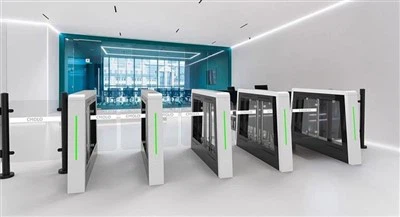
1, Overview of Safety Regulations for Transportation Hubs in Various Countries
(1) United States
In American transportation hubs, safety rules highlight thorough risk assessment and avoidance. Regarding security facilities, one must have a fast-acting intrusion detection system capable of tracking aberrant behavior in real time and quickly producing alarms. Simultaneously, focus is on the capacity to react fast to crises, including the sensible arrangement of fire-fighting stations and unhindered paths of escape. Personnel access control calls for precise identification of personnel IDs to stop terrorists and hazardous people from getting into transit hubs. Furthermore, there are explicit criteria for safety education and training to guarantee personnel and passengers grasp safety rules and emergency responses.
(2) The European Union
EU nations stress shared standards and cooperative efforts in transportation hub safety rules. Strict mechanical and electrical safety rules have been developed to guarantee the safe running of several equipment in transportation facilities. Regarding personnel access management, modern biometric technology is applied for identification verification even while personal privacy protection is stressed. To reach flawless integration between transportation hubs across nations, one needs equipment like turnstiles to have good compatibility and interoperability. Furthermore highly demanded are environmental safety criteria, including lowering the pollution generated by machine operation toward the surroundings.
(3) Japan
Safety rules for Japan's transportation hub are well-known for their accuracy and elegance. Seismic design is strictly regulated since Japan experiences regular earthquakes and transportation hub equipment needs enough seismic resistance. Efficiency and accuracy are stressed in staff access control to satisfy the fast transit demands of a lot of people. Concurrent with this is consideration for equipment maintenance and management; comprehensive equipment inspection and maintenance schedules are developed to guarantee constant good operational condition of the machinery. Furthermore well defined rules on safety indicators and guiding systems help to enable quick passenger evacuation in an emergency.
(4) China
The safety rules for Chinese transportation hubs take several safety aspects into account all around. Regarding counter-terrorism and riot control, security checks on people and objects have been enhanced and equipment like turnstiles is necessary to properly cooperate with security inspection systems. Strict guidelines have been developed for fire safety concerning fire compartments, breadth of evacuation channels, and provision of fire-fighting tools. Combining several technology tools such card swiping, QR code scanning, facial recognition, etc. helps staff access management to increase security and convenience of access. Simultaneously, safety education and emergency exercises for staff members in transportation hubs should be given top priority to help them to handle crises.
2, The adaptability of rotary turnstiles to national safety regulations in terms of technology, design, and functionality
(1) Security protection technology
Anti-intrus and anti-tailing: Most turnstiles employ sophisticated sensor technology to precisely identify staff passage, therefore prohibiting unauthorized access and tailgating. This satisfies the minimum standards set by different nations for the security of transportation hub staff, including US rules prohibiting terrorists and dangerous people from entering and turnstile anti-tailgating action helps to lower such hazards. The EU additionally stresses personnel movement's safety regulation and the turnstile feature helps to guarantee the safety within transportation hubs.
Emergency braking and fault protection: In case of an emergency or equipment breakdown, the rotary brake's emergency braking capability swiftly stops functioning, therefore preventing passenger injury. Simultaneously, it also features a thorough fault protection system including short circuit protection, overload protection, etc., so guaranteeing the dependability and safe running of the equipment. This satisfies national safety standards for transportation hub equipment, including those of Japan, which has great equipment dependability. The turnstile's fault protection ability helps to lower the safety risks brought on by equipment breakdowns.
(2) Design and Materials
Structural stability and strength: The rotary gate's structural design has enough strength and stability while considering several external pressures. High-strength metal materials form the main frame since they can resist large impact pressures. This complies with national standards for structural safety of transportation hub equipment in several nations. For instance, China considers the structural strength of turnstiles to satisfy long-term needs and the longevity and stability of equipment in transportation hub building.
Fireproof and moisture-proof performance: Certain rotary turnstiles use moisture-proof design and fireproof materials to help to somewhat prevent fire and water vapor erosion. Meeting fire safety rules in many nations and adjusting to diverse environmental circumstances depend on this, hence it is quite important. If the EU has criteria for environmental safety, the moisture-proof performance of rotary turnstiles can guarantee the normal operation of equipment in humid environments; Japan has strict fire protection design standards; thus, the application of fire-resistant materials in turn helps to improve the general fire resistance of transportation hubs.
(3) Functional characteristics
The turnstile enables several identity detection and verification techniques including card swiping, scanning codes, facial recognition, fingerprint recognition, etc. This is in line with the criteria of many nations for accurate identification of personnel identity, such the United States' requirement for accurate identification of personnel identity to prevent dangerous personnel from entering, China's combination of various technological means for personnel access management, and the several identification functions of turnstiles that can meet the needs of many scenarios.
Rotary turnstiles may track passengers' passage data like passage time, identity, etc. Security auditing and event tracking make use of these data to enable fast access of pertinent information in the case of a security issue and provide a foundation for management and investigation. This enhances the efficiency and degree of safety management and satisfies the criteria of several nations for the security control of transportation hubs.
AFC Metro Flap Barrier Turnstile Gate


WhatsApp : 0086-15999546575
Skype : cmolo.joy
Email : contact@cmolo.com
Tel : 0086-15999546575
CMOLO Industrial Park,NO. 144-1, Hengping Road,Henggang Street, Longgang District, Shenzhen City, China