1. Technical Architecture: Digital Foundation for End-to-End Cloud Collaboration
The three-tier architecture of "terminal device+edge computing+cloud management" connects the rotating gate and the mall app.
Layer for terminal devices
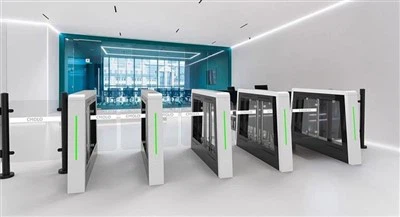
Modern turnstiles have a lot of different sensors built in, such scanning modules, facial recognition cameras, NFC card readers, and more. They also work with a lot of different communication protocols, like QR codes, Bluetooth, and NFC. For instance, a certain type of gate machine has a scanning engine with a million pixels. It can read QR codes on mobile phone displays in 0.2 seconds and keep a recognition rate of 99.9% even in bright or reflecting situations. The ARM Cortex-A53 CPU on the gate motherboard runs the Linux embedded system, which makes sure that the gate uses little power and is very stable.
Layer for edge computing
Set up edge servers in your area to handle duties that need to be done in real time, like decoding QR codes, checking permissions, and keeping an eye on gate status. For instance, edge servers operate 50 gates at once in a big shopping mall, keeping data transmission latency to less than 50ms to keep traffic flowing smoothly during busy times. Edge servers can also run simple AI models that can spot strange activities like tailgating and breaking barriers. This lets them do some processing on their own, which lightens the burden on the cloud.
Layer for managing the cloud
The cloud platform is in charge of storing user data, managing permissions, keeping track of traffic, and doing maintenance and operations from afar. The gate system works perfectly with shopping mall apps, membership systems, payment systems, CRM systems, and more through API interfaces. For instance, when a consumer buys a movie ticket using the app, the cloud platform automatically sends the electronic ticket information to the gate system. After the consumer gets there, they can scan the code to go in without having to check it by hand. The cloud also lets you give out dynamic permissions, such opening gate channels for a short time to deal with a sudden increase in passenger traffic.
2. Binding process: processing the whole link from activating the device to linking the data
To connect the turnstile to the mall app, there are four main steps: activating the device, setting up the network, integrating the system, and managing permissions.
Setting up the network and turning on the device
For example, the Hikvision Jianxing 2 series integrated gate can be activated in two ways: by using mobile NFC or the SADP tool:
Mobile NFC activation: To activate NFC on Android phones, get close to the gate camera and it will immediately go to the activation page. To activate Apple phones, connect to the gateway hotspot and input the serial number and password.
How to turn on the SADP tool: To finish activating SADP, install the program on your computer, look for the gate's IP address, and type in the default password. After activation, the mall's network environment needs to change the gateway IP address so that it is on the same LAN as the cloud server.
Integration of systems and the creation of APIs
The mall app needs to develop a gate control module that works with the cloud platform via a RESTful API. The main interfaces are:
Scan code verification interface: Get QR code data from the gate, check that it is correct and that you have the right rights.
The gate control interface delivers commands to open and close the gate and lets you operate and maintain it from a distance.
Data synchronization interface: The mall app gets real-time updates on gate traffic records so that it may keep track of passenger flow and analyze their behavior.
For instance, a certain shopping mall software uses API interfaces to automate the whole process of "scanning code to buy tickets, opening gates, and uploading consumption records." This cuts down on the cost of manual verification by 80%.
Managing permissions and allowing access dynamically
The mall app's user system is tightly connected to the gate permissions after they are bound. For instance:
Benefits of becoming a member: The app lets advanced members create dynamic QR codes. The gate scans these codes to check their membership level and automatically opens VIP channels.
Temporary permission: The shopping center can give out QR codes that only work for a short time to people who take part in promotional events. It will check the validity time of the activity after scanning the code at the gate, and it will automatically end when that period ends.
Multiple code checks: The gate can read both the ticket QR code and the member identity code at the same time, allowing for distinct services. For instance, a certain sports arena lets VIP members go via a special gate that cuts their travel time to just one second using "facial recognition+QR code" dual verification.
3. Application of the scenario: Change from traffic control to full chain operation
The connection between turnstiles and mall apps not only makes entering the mall easier, but it also encourages changes in how malls operate:
Smart retail situation
The gate is connected to the self-checkout system in the supermarket export management system. The gate opens automatically after the consumer pays, and the moment of departure is recorded. After a certain multinational chain store put in turnstiles, for instance, the rate of congestion at the border dropped by 65%, and the rate of lost goods dropped from 1.2% to 0.3%. You can also connect the smart shopping cart to the gate. The gate automatically scans the barcode of the items and completes the payment once the consumer puts them in the shopping basket. This is called a "seamless exit."
Scenes of entertainment and shows
The gate checks electronic tickets at big events by scanning codes and using heat map analysis to help organizers improve the arrangement of booths and the flow of people. For instance, a certain exhibition found out by QR code scanning data at the gate that most of the people who came on Saturday afternoons were going to the technology display section. The next year, they made that area 30% bigger. The gate can also be connected to the interactive gaming system. After signing in with the QR code, the audience can take part in a lottery, a quiz, and other activities that make them feel like they are part of the event.
Scenario for member operation
Once the gate is linked to the mall app, it can track how long customers spend in the mall, how often they go, and other information that may be used to create member profiles. For instance, by looking at gate statistics, one shopping mall concluded that weekends from 10 am to 12 pm are the busiest times for families. So, during this time, it started giving out coupons for parent-child activities, which raised the member repurchase rate by 15%. You may also connect the gate to the member points system. When consumers scan the code to get in, they automatically earn points that they can use to get discounts on products or extra parking time.
AFC Automatic Subway Speed Gate Turnstile


WhatsApp : 0086-15999546575
Skype : cmolo.joy
Email : contact@cmolo.com
Tel : 0086-15999546575
CMOLO Industrial Park,NO. 144-1, Hengping Road,Henggang Street, Longgang District, Shenzhen City, China