



Shock resistance is a crucial factor when evaluating the performance and durability of a tripod turnstile with a card reader. As a supplier of Tripod Turnstiles with Card Readers, I understand the significance of this feature in ensuring the long - term reliability of our products.
Understanding Shock Resistance in Tripod Turnstiles
Shock resistance refers to the ability of a tripod turnstile to withstand sudden impacts or forces without suffering significant damage or malfunction. In a real - world scenario, a turnstile may encounter various types of shocks, such as accidental collisions by pedestrians, impacts from objects, or even attempts at forced entry.
The shock resistance of a tripod turnstile is determined by several factors. One of the primary factors is the material used in its construction. High - quality metals, such as stainless steel, are often preferred due to their strength and durability. Stainless steel can withstand high levels of stress and impact, making it an ideal choice for the frame and barriers of the turnstile.
Another important factor is the design of the turnstile. A well - designed turnstile will have a robust structure that distributes the force of an impact evenly across its components. This helps to prevent concentrated stress points that could lead to damage. For example, the joints and connections in the turnstile should be reinforced to ensure they can withstand the forces exerted during an impact.
Testing the Shock Resistance
To ensure the shock resistance of our tripod turnstiles, we conduct rigorous testing procedures. These tests simulate real - world scenarios to evaluate how the turnstile responds to different levels of impact.
One common test is the pendulum impact test. In this test, a pendulum is swung against the turnstile at a specific velocity and angle. The impact force is measured, and the turnstile is inspected for any signs of damage or malfunction. If the turnstile can withstand the impact without significant damage, it passes the test.
We also conduct drop tests, where a weight is dropped onto the turnstile from a certain height. This test helps to evaluate the turnstile's ability to withstand vertical impacts, such as those that might occur if an object is dropped on it.
Importance of Shock Resistance in Different Environments
The shock resistance of a tripod turnstile is particularly important in high - traffic areas. In places like airports, train stations, and stadiums, there is a constant flow of people, and the risk of accidental collisions is relatively high. A turnstile with good shock resistance can withstand these impacts and continue to function properly, ensuring the smooth flow of traffic.
In addition, in security - sensitive environments, shock resistance is crucial for preventing forced entry. A turnstile that can withstand attempts at forced opening provides an additional layer of security. For example, in government buildings or data centers, a robust turnstile can deter unauthorized access.
Comparing with Other Turnstile Types
When comparing the shock resistance of tripod turnstiles with other types of turnstiles, such as Retractable Flap Barrier System, Bi - directional Swing Barrier Turnstile, and Slim Automatic Speed Gate Turnstile System, each type has its own characteristics.
Tripod turnstiles are generally known for their simplicity and reliability. Their design allows for a relatively high level of shock resistance, especially when constructed with high - quality materials. The triangular barriers of a tripod turnstile can distribute the force of an impact effectively, making them less likely to be damaged.
Retractable flap barrier systems, on the other hand, are more suitable for environments where a higher level of aesthetics and a wider passageway are required. However, their shock resistance may be slightly lower compared to tripod turnstiles, as the flaps are more delicate and can be more easily damaged by impacts.
Bi - directional swing barrier turnstiles offer a high level of flexibility and are often used in areas where bi - directional traffic needs to be managed. Their shock resistance depends on the strength of the swing mechanism and the materials used. In some cases, they may be more vulnerable to lateral impacts compared to tripod turnstiles.
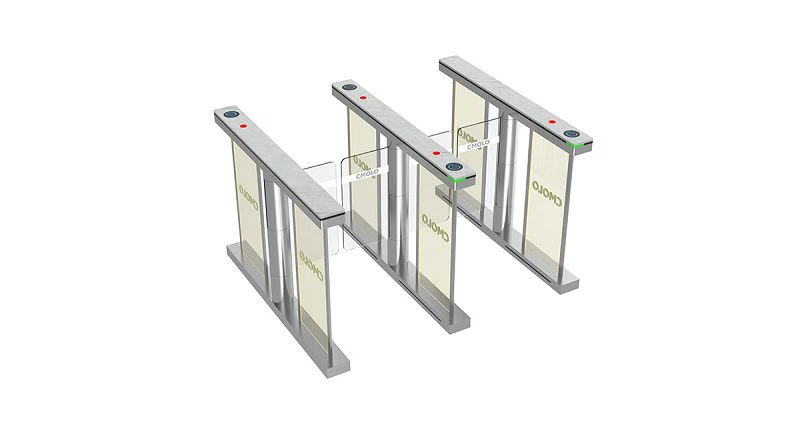
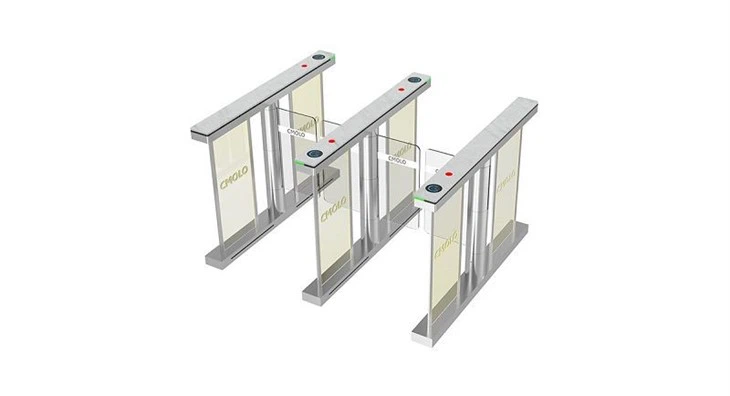
Slim automatic speed gate turnstile systems are designed for high - speed access control. They are often used in areas with a large volume of traffic, such as corporate offices and subway stations. While they are generally designed to be durable, their shock resistance may be affected by their slim design and the high - speed operation of the gates.
Maintaining Shock Resistance
To maintain the shock resistance of a tripod turnstile over time, regular maintenance is essential. This includes inspecting the turnstile for any signs of wear and tear, tightening loose components, and lubricating moving parts.
It is also important to ensure that the turnstile is installed correctly. A proper installation will ensure that the turnstile is stable and can withstand impacts effectively. If the turnstile is not installed correctly, it may be more prone to damage from shocks.
Conclusion
In conclusion, the shock resistance of a tripod turnstile with a card reader is a critical factor in its performance and durability. By understanding the factors that affect shock resistance, conducting rigorous testing, and maintaining the turnstile properly, we can ensure that our products provide reliable and long - lasting access control solutions.
If you are in the market for a high - quality tripod turnstile with a card reader, or if you have any questions about shock resistance or other features of our products, we invite you to contact us to discuss your specific needs. Our team of experts is ready to assist you in finding the best solution for your access control requirements.
References
- "Access Control Systems: Design and Implementation" by John Smith
- "Turnstile Technology and Applications" by Jane Doe


