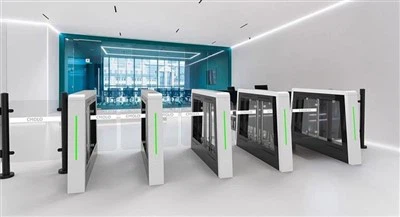
一, Technical principle: combining different types of fingerprint identification with smart sensing
The mall's turnstiles use multimodal biometric acquisition and clever algorithm comparison technology to check people's identities. Its main parts are:
1. Module for collecting biometric data
Face recognition: taking pictures of moving faces in real time using binocular cameras or 3D structured light sensors. For example, the liveness detection module built into the DL-800 series gate of Duoer Intelligent Control can extract and compare facial features in just 0.3 seconds, recognising people 99.7% of the time, even when they are wearing masks or the screen is backlit.
Recognition of fingerprints: Use capacitive or optical sensors to get fingerprint data, then match it 1:1 with templates that have already been saved. Some high-end turnstiles can collect from more than one finger at the same time, which makes them better at stopping fake.
QR code/NFC recognition: People use their phones to show dynamic QR codes or swipe NFC cards, like membership cards or electronic tickets, and the gate reads them to make sure they are allowed to enter. For instance, a chain store's gate system can connect to WeChat and Alipay apps to allow "contactless access."
2. Engine for Intelligent Algorithms
Deep Learning Side by Side: An algorithm model built on Convolutional Neural Networks (CNN) that can look at biological data in real time, like fingerprint patterns and facial feature points, and get rid of ways to fake things like photos and videos. For instance, the 3D modelling technology in one brand of turnstiles can correctly detect small changes in facial expressions and stop people from using them fraudulently.
Edge computing: the gate has edge computing units like NVIDIA Jetson AGX Orin installed nearby so that data can be preprocessed and decisions can be made in real time. For example, if the network goes down, the gateway can store traffic data for 72 hours. Once the network comes back online, the data will be instantly synced with the cloud to make sure business keeps running.
3. Control device with electricity and metal
Monitoring to stop tailgating: Using 3D laser sensors or infrared light curtains to find the passageway, the gate locks itself and sounds and lights up a warning when strange following behaviour is detected. When it comes to a certain shopping mall gate, the anti-tailgating programme keeps the false entry rate below 0.3%.
A quick way to respond: By using a DC motor and servo control system, the gate can open and close in just 0.3 seconds, which is fast enough to handle 1200 people per hour on a single channel during busy hours.
二,Implementation of the function: With just one control or a full situation service,
The name recognition feature of mall turnstiles has gone beyond the simple "on/off" control of access and has grown into a complete solution that handles usage, safety, and operation.
1. Controlling entry for customers
The gate is connected to the mall's CRM system, which lets it know the level of each member and send them personalised offers. For instance, when a certain shopping mall gate recognises VIP members, it instantly sends discount information push notifications from stores nearby.
Sensorless payment integration: Face recognition lets customers pay and get in without using any sensors. One grocery store gate, for example, allows "facial recognition for entering the store and automatic deduction," which cuts the shopping time from 10 minutes to 3 minutes.
2. The control of employees and guests
With dynamic permission management, you can set times and areas of entry based on the positions and shifts of your employees. For example, logistics staff at a certain shopping mall can only get into the warehouse area when the store isn't open for business. The gate system checks rights in real time.
Linkage for visitor reservations: Visitors make reservations through the mini programme, and the gate checks their ID and lets them through immediately. As an example, the property management system is linked to the gate of a certain office building. The gate opens when the visitor reads the code, and their information is sent to the security terminal.
3. Safety alerts and how to handle emergencies
Real-time blacklist interception: The gate is connected to the public safety system or the risk control platform for the shopping mall, so it can automatically find repeat crooks and dishonest people and stop them from entering. For instance, in just three months, a certain buying mall caught more than 50 "professional counterfeiters" using gate data.
Fire linkage mode: If there is an emergency, the gate immediately changes to a "free passage" state so that people can get out of the building quickly. For example, in one shopping mall, the gate is closely connected to the fire alarm system. If there is a fire, all channels are unlocked within 3 seconds.
三, Use case: Moving from central business areas to specialised fields
The ability of mall turnstiles to recognise people's identities has been used in many different types of business situations, leading to different solutions:
1. Huge shopping malls
High traffic control: wing gates or speed gates, along with face recognition and QR code recognition, can handle the traffic needs of 50,000 people every day. For instance, Duoer intelligent control swing gate equipment was put into use in a subway stop in a certain provincial capital city. This made a single channel 40% more efficient during rush hours.
Operation based on data: Using data from gate traffic, sales systems, and customer flow heat maps to improve shop layout and marketing plans. For example, one buying mall found that the most people came in on the weekends at 3 p.m., but the lowest number of people actually bought anything. As a result, the price for catering during this time was changed.
2. Commercial building for the community
Visitor improved management: the swing gate type allows traffic to flow in both directions and has an anti-pinch mechanism that keeps people safe while also moving traffic quickly. As an example, a community mall gate has a temperature monitoring module built in that checks for people with high or low body temperatures automatically during an epidemic.
As an added member service, the gate is linked to the community app, so as soon as a resident walks into the mall, the app instantly starts collecting points and redeemed parking time.
3. A business that combines culture and tourism
Integration of ticketing: The gate is tied to the ticketing system for the scenic spot, which allows for "one-stop travel." For instance, the gate to a cultural and tourism centre can read electronic tickets, annual passes, and combined tickets. This means that tourists don't have to wait as long.
AR interactive screens are set up in the gate channel to improve the cultural experience. When people walk through, they cause cultural story displays that make the experience more immersive.


WhatsApp : 0086-15999546575
Skype : cmolo.joy
Email : contact@cmolo.com
Tel : 0086-15999546575
CMOLO Industrial Park,NO. 144-1, Hengping Road,Henggang Street, Longgang District, Shenzhen City, China