1,Technical features and ability to change to different scenes
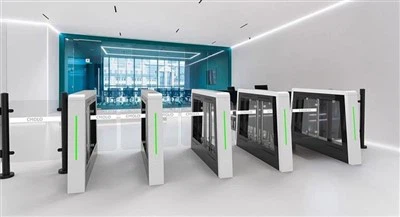
The turnstile is made of a fully enclosed frame, and it controls traffic with a mix of spinning arms, door panels, and vertical turning shafts. The best thing about it is its anti-tailgating feature, which uses infrared and human body sensors to track the size and speed of people in real time. It makes a single 120° precise turn when combined with a mechanical ratchet device, so only one person can pass at a time. This plan worked well to stop people from skipping the fare, and after the renovations at Shanghai Railway Station, the gap at the bottom of the gate was cut down to one-third of what it used to be. This made it more than 60% harder to sneak through illegally.
In terms of being able to react to a wide range of environments, turnstiles have shown a lot of promise. The hydraulic shock absorber core can work in temperatures ranging from -20 °C to 60 °C, and the IP45 security level can handle rain, sand, dust, and other bad weather. In -15 ℃ temperatures, winter tests at Beijing West Railway Station show that the equipment failure rate is 78% lower than with traditional turnstiles. This means that the turnstiles will work smoothly during busy times like the Spring Festival traffic rush.
2,Proof that making traffic flow more smoothly works
The 2019 project to renovate Shanghai Railway Station gave standard data samples. With 52 turnstiles, the single-channel traffic efficiency went from 28 people per minute for the first three-bar turnstile to 35 people per minute, a 25% rise. The automatic opening of the revolving door makes a channel space 80 cm x 180 cm, which cuts the time it takes to pass to 3.2 seconds per person, which is 40% faster than traditional equipment. This is especially helpful for people carrying luggage over 28 inches.
The second and third shift waiting rooms at Beijing West Railway Station are a better example of how things work. The average time for a second security check for people changing trains within the station has been cut from 8 minutes to 2.5 minutes by installing reverse self-service gates and mobile ticket checking devices. According to statistics from the system, the area handled an average of 120,000 people per day during the summer of 2024, and there were no safety incidents due to crowded gates.
3, Improvements to the security controls
When rotating turnstiles are used, the mechanical anti-reverse technology is a big safety feature. A source in Shenzhen made a 15° anti-reverse mechanism that can lock the electromagnetic mechanism within 0.3 seconds of detecting reverse impact force. In a real test at Beijing West Railway Station, this technology cuts the chance of successfully breaking through a forced gate from 12% with traditional tools to 0.7%. When combined with a face recognition system, the chance of making a mistake drops to less than 0.001%.
The intelligent monitoring system makes protection even better. The Shanghai Railway Station gate has a ten-channel dry contact control signal that can keep an eye on 23 different types of odd events in real time, such as people breaking the rules and broken equipment. After the system went live, the number of cases of ticket fraud dropped by 82% year-over-year, the time it took to fix broken equipment was cut in half to 90 seconds, and the cost of maintenance went down by 35%.
4,The best way to reduce the costs of operation and upkeep
The fully stainless steel rainproof box and flexible design of the rotary gate keep the cost of maintaining a single device to less than 1200 yuan per year. Compared to figures from Shanghai Railway Station, the cost of buying spare parts every year has gone down by 40% since the renovation, and inspections are now done by hand twice a week instead of three times a day. Beijing West Station uses a remote diagnostic system that can tell you about mechanical wear 72 hours in advance and keep the rate of surprise failure below 0.5%.
When you combine a DC24V low-voltage power supply with an ARM intelligent control chip, you can lower the power usage of a single device to 45W. This is 60% less energy than traditional devices. The Shanghai Railway Station can save about 180000 yuan a year on its power bills, which is the same as cutting carbon emissions by 120 tonnes.


WhatsApp : 0086-15999546575
Skype : cmolo.joy
Email : contact@cmolo.com
Tel : 0086-15999546575
CMOLO Industrial Park,NO. 144-1, Hengping Road,Henggang Street, Longgang District, Shenzhen City, China