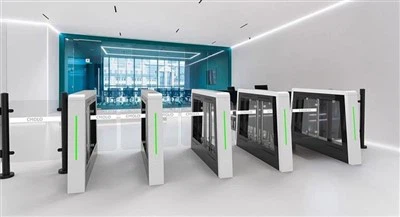
1. Design optimization: people-oriented, pay attention to details.
Ergonomic design: The size, shape, and material selection of turnstiles should fully consider ergonomic principles to ensure that users feel comfortable and natural during the passage process. For example, the height, width, and rotation angle of the gate should be adapted to the needs of people of different body types to avoid causing traffic obstacles or physical discomfort.
Intuitive user interface: simplifies the operation process and adopts clear and intuitive indicator signs and button layouts, allowing users to quickly master the usage method without guidance. At the same time, interface design should consider accessibility to ensure that people with visual or physical disabilities can easily operate it.
The integration of aesthetics and environment: The appearance design of the turnstile should be coordinated with the overall style of the place, enhancing visual aesthetics while considering its durability and ease of cleaning to maintain long-term aesthetics and practicality.
2. Technological Innovation: Upgrading Intelligence and Automation
Fast identification technology: using advanced biometric technology (such as facial recognition and fingerprint recognition) or efficient RFID readers to achieve rapid and accurate identity verification, reduce waiting time, and improve traffic efficiency.
Intelligent traffic management: Integrated with intelligent sensors and algorithms, real-time monitoring of pedestrian density, automatic adjustment of gate opening speed or quantity, effectively responding to traffic pressure during peak hours, and avoiding congestion.
Remote monitoring and maintenance: Establish a cloud management system to achieve remote monitoring, fault diagnosis, and software upgrades of turnstiles; quickly respond to faults; reduce downtime; and ensure smooth traffic.
3. Management optimization: efficient operation and flexible configuration
Flexible permission management: Provides multi-level and fine-grained permission settings to meet the needs of different positions, departments, or temporary visitors, achieving refined management while facilitating quick adjustment and revocation of permissions.
Data analysis and reporting: Collect and analyze traffic data, generate detailed traffic reports, help managers understand crowd trends, and optimize resource allocation, such as adjusting gate layout, adjusting working hours, etc.
Emergency response mechanism: Develop detailed emergency plans, including emergency evacuation, fire alarm linkage, etc., to ensure that the turnstile can respond quickly in emergency situations and ensure personnel safety.
4. User education: Enhance awareness and increase participation.
User training: Provide training on the use of turnstiles to newly hired employees and visitors, explaining operating procedures, precautions, and emergency response measures to enhance users' safety awareness and operational skills.
Information Transparency: Regularly publish usage guidelines, maintenance notifications, and optimization progress for turnstiles through bulletin boards, internal communication, or apps, enhancing user engagement and trust.
Feedback mechanism: Establish user feedback channels, encourage users to raise issues and improvement suggestions during use, respond promptly and adopt reasonable opinions, and form a virtuous cycle of continuous improvement.
5. Case sharing and future prospects
Case study: After introducing intelligent turnstiles in a large office park, the average travel time was reduced from 15 seconds to less than 5 seconds by integrating facial recognition technology. At the same time, the layout of the turnstiles was optimized through data analysis, further improving travel efficiency. In addition, through user education and training, employee satisfaction with rotary turnstiles has increased to over 95%.
Future outlook: With the continuous development of IoT, big data, and artificial intelligence technologies, turnstiles will become more intelligent and personalized. For example, combine AI algorithms to predict pedestrian flow and dynamically adjust gate status; utilize big data to analyze user behavior and provide customized services; We can achieve linkage with other smart devices through IoT technology, building a smarter and more efficient access control system.


WhatsApp : 0086-15999546575
Skype : cmolo.joy
Email : contact@cmolo.com
Tel : 0086-15999546575
CMOLO Industrial Park,NO. 144-1, Hengping Road,Henggang Street, Longgang District, Shenzhen City, China