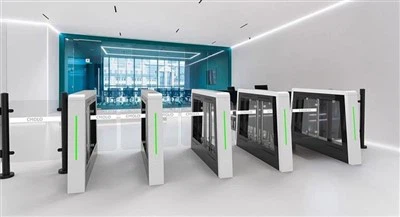
1. Planning and choosing a system
It is important to clearly state requirements.
Clearing the actual needs comes first before combining turnstiles and access control systems. This consideration covers not only the quantity of pedestrians but also speed requirements, security levels, and the need to integrate other systems, such as visitor management and attendance. Making the requirements clear helps in selecting the best type of gate (like one-way, two-way, or high-speed rotary gates) and access control system, as well as deciding if different ways to verify identity, like facial recognition, fingerprint scanning, or IC cards, are necessary.
Systems with compatibility issues
It is vital to guarantee that the chosen turnstile fits the access control system very well. To guarantee perfect integration between the two, one must have a thorough awareness of the communication protocol, interface standards, and other knowledge while choosing a product. As future system updates are under consideration, choose technologies that embrace open APIs to enable the integration of increasingly sophisticated apps going forward.
2. Instead of installation, debugging, and improvement,
Expert implementation
A professional team should install the turnstile to guarantee that its position is appropriate, stable, and does not compromise regular traffic. Pay attention to the hidden lies of the power cord and the accessibility of the emergency stop button throughout the installation process to guarantee a rapid reaction in case of an emergency.
Debugging software configurations
We should specifically configure software for managing access control based on real demands, including user authorization allocation, access rule setup, and alarm mechanism building. During the debugging stage, we should thoroughly evaluate the accuracy and response speed of all verification techniques to ensure steady system operation. We will also conduct stress testing to replicate the maximum hourly pedestrian flow and verify the system's processing capacity under heavy loads.
3. Daily maintenance and administration
data control and analysis
The turnstile may automatically record all passing data, including passage time, personnel identity, passage status, etc., once it has been included in the access control system. Reasonably applying this data to personnel flow analysis and aberrant behavior monitoring will help raise the degree of safety control. Frequent data exports assist decision-making processes.
Constant maintenance and upkeep
Ensuring long-term steady operation of the system depends mostly on regular cleaning, inspection, and turnstile and access control system maintenance. The inspection covers mechanical component wear, sensor sensitivity, motor operation, etc., but is not restricted to any one thing. Please address any identified issues promptly to prevent minor problems from escalating into significant breakdowns.
4. Intelligent development and enhancement
Intelligent Updates
Turnstiles and access control systems are likewise constantly changing as technology develops. To raise the intelligence level of the system even further, think about implementing IoT technology to enable remote monitoring and management or artificial intelligence recognition technology, such as deep learning algorithms, to boost facial recognition accuracy.
scalability of systems
When choosing a system, consider its scalability so it can easily add new features later, like temperature detection and health code checks, to keep up with changing security needs. At the same time, the system should allow access from different platforms, like mobile apps and websites, so management can monitor its performance anytime and anywhere. Simultaneously, the system should facilitate multi-platform access, including mobile apps and web platforms, allowing management staff to monitor system performance from any location at any time.
5. Training and user experience optimization
A pleasant user experience is a key factor in increasing system acceptability. We can lower user waiting times and increase traffic efficiency by putting policies such as sensible channel structure, clear signage, and fast response verification systems into use. We concurrently offer various verification techniques to cater to the needs of diverse user groups.
Management and security staff should receive methodical operational training to guarantee their knowledge of system operations, everyday activities, and emergency response protocols. Organize frequent retraining or training courses to improve the general team management and refresh knowledge.
Access Control Speed Gate Turnstile


WhatsApp : 0086-15999546575
Skype : cmolo.joy
Email : contact@cmolo.com
Tel : 0086-15999546575
CMOLO Industrial Park,NO. 144-1, Hengping Road,Henggang Street, Longgang District, Shenzhen City, China