一, Appropriately direct flow.
Clear traffic signs should be placed in areas with turnstiles installed and utilized to direct staff members to pass in the designated direction and manner. Arranging arrow signs at the gate's entrance, for instance, tells staff members to pass in one direction and prevents forced or reverse access. Especially for those who are not familiar with equipment operation, such as the elderly and children, arrange dedicated personnel or, through broadcasting and other means, provide necessary guidance and reminders to the passing personnel, so patiently guiding them to pass through the gate correctly and prevent damage to the gate due to improper operation.
To avoid a strong passage.
When hurrying through the turnstile, emotionally frustrated, or for another cause, some staff members may act violently in passing through the turnstile-that is, pushing, dragging, or hitting the gate wings. This behavior could create safety risks in addition to readily leading to distortion of the gate wings and damage to transmission components. Consequently, it is essential to improve the knowledge of civilized passage among passage staff by strengthening their education and management. Concurrently, set up monitoring tools around the gate to document and control violent passing behavior. Those who purposefully destroy equipment ought to answer legally.
Three here control the passivity speed.
Rotary turnstile design has particular speed restrictions; too fast speeds could cause the turnstile to fail to react in a timely manner, leading to problems including motor overload and door wing jamming. Consequently, staff members should be instructed to keep a suitable speed and refrain from passing rapidly during the gate wing opening or closing. Furthermore, turnstiles with rapid passing features can be chosen depending on actual needs, and suitable speed limits can be established to satisfy the traffic demand during peak hours for specific locations that call for quick passage, including subways, rail stations, etc.
二,Daily maintenance
Dust and grime can build up in rotary turnstiles, which not only compromises the equipment's look but could also infiltrate the inside and damage mechanical and electrical components. The gate needs to be routinely cleaned thus. Avoiding the use of sharp instruments or corrosive cleaning products to avoid scratching or corroding the equipment surface, a soft, dry cloth or somewhat moist cloth should be used to wipe the gate housing, door wings, and other parts during cleaning. A little brush or vacuum cleaner can be used to clean the door wings, sensors, and other components to guarantee that they are clear of dust and dirt and hence match the movement.
Mechanical component inspection and lubrication
The normal running of rotary turnstiles depends critically on their mechanical components- motors, reducers, transmission shafts, bearings, etc.). For looseness, wear, deformation, and other issues, routinely check these parts. Should loose components be discovered, they should be tightened promptly; for highly worn components, they should be replaced promptly as well. At the same time, lubricating oil or grease should be routinely applied to mechanical components to lower friction between components, minimize wear, and extend service life per guidelines of the equipment handbook. For instance, whereas reducers should routinely replenish lubricating oil based on use, motor bearings usually require to be greased every 3-6 months.
Testing electrical systems
Comprising components like power supply, control board, sensors, and motor drivers, the turnstile's electrical system is its control core. Inspect the electrical system often to see whether the power supply voltage is constant, whether the connections of different electrical components are strong, and whether any faults-such as open or short circuits-exist. Use multimeters and other tools to measure essential electrical parameters such as voltage, current, resistance, etc., to ensure they meet equipment requirements. Simultaneously, the sensor's sensitivity and accuracy should be investigated; if necessary, calibration or replacement can be done. Furthermore taken under consideration should be moisture, dust, and lightning protection strategies for the electrical system to prevent environmental damage of electrical components.
Functional tests
Test the turnstile's several purposes routinely: the alarm, direction control, opening and closing of the door wings, and so on. Simulating several practical use situations and verifying if the equipment can run as expected is essential during the testing phase. If we discover any functional irregularities, we should promptly investigate and fix the problem. When the door wings cannot be opened or closed normally, for instance, it could be the result of motor failure, transmission component jamming, or control program issues, which should be looked at and addressed one by one.
三,Control of humidity and temperature
Rotary turnstiles have certain operating environment temperature and humidity criteria. Generally speaking, equipment's appropriate running temperature range is -20°C to 50°C; relative humidity should be regulated between 30% and 90%. The performance of electrical components like motors and control boards may be affected by either too high or too low ambient temperature, therefore causing equipment breakdown. Too high humidity can readily cause electrical components to get wet, which would create short circuits. Thus, in locations where rotary turnstiles are located, required temperature and humidity control equipment should be fitted, like air conditioning, dehumidifiers, etc., to ensure that the environmental temperature and humidity satisfy the equipment requirements.
Preventing dust and moisture
Two main "killers of turnstiles are dust and dampness. Dust will penetrate the equipment's interior and stick to mechanical and electrical components, therefore influencing its normal running condition; moisture can rust metal parts and short-circuit electrical components. A dust cover or dust net should be erected at the gate installation point to stop dust and moisture from damaging the equipment by lowering the dust entry. Simultaneously, it is important to make sure the equipment's installation environment is dry and aired and steer clear of installing it in wet areas such as water rooms and basements. Should the equipment become damp, it should be promptly dried using instruments including hair dryers and desiccants; although, care should be taken to prevent inflicting additional damage to the equipment.
Three here prevent significant electromagnetic interference.
Strong electromagnetic interference might lead to equipment control failure, data transmission mistakes, and other issues since the turnstile's electrical system is susceptible to electromagnetic interference. Therefore, one should avoid placing a turnstile near powerful electromagnetic sources like large motors, transformers, and high-frequency equipment. Effective electromagnetic shielding techniques should be followed, if necessary, including covering the equipment with electromagnetic shielding covers, utilizing shielded connections, etc., so lowering the influence of electromagnetic interference on the machinery.
四, Reasonable choice and installation
Based on real requirements, choose.
When selecting a turnstile, one should carefully analyze the real needs of the site, including elements related to pedestrian movement, direction of passage, and safety degree. If there is a significant flow of people, a gate with quick passing speed and powerful processing capacity should be selected; If bidirectional traffic control is necessary, a gate with bidirectional traffic function should be selected. Simultaneously, it is essential to choose suitable safety level gates depending on the safety criteria of the venue, such gates with anti-tailgating, anti- pinch and other purposes, to guarantee the safety of the venue.
Two. Standardize building and installation practices.
Rotary turnstile installation quality directly influences their service lifetime. Strictly following the guidelines of the equipment manual is essential during the installation process to guarantee that the equipment is fitted horizontally and firmly. To prevent equipment shaking or tilting during operation, the site of installation should be a level, firm ground. Concurrently, one should pay close attention to the equipment's wire requirements. Separately laying power lines, signal lines, etc. helps to prevent mutual interference. Comprehensive debugging and testing have to be done following installation to guarantee the normal running of several equipment features.
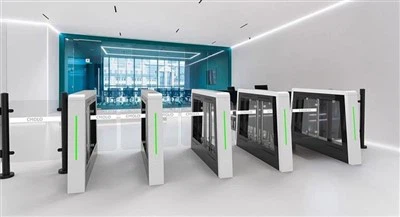
AFC Automatic Subway Speed Gate Turnstile


WhatsApp : 0086-15999546575
Skype : cmolo.joy
Email : contact@cmolo.com
Tel : 0086-15999546575
CMOLO Industrial Park,NO. 144-1, Hengping Road,Henggang Street, Longgang District, Shenzhen City, China