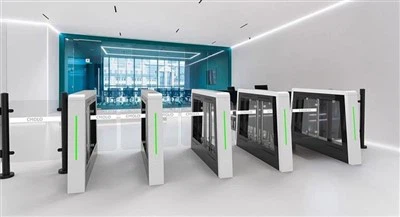
Mechanical system troubleshooting
1. The turntable's unusual swing
During operation, the turntable leaps up and down or deviates laterally in a fault phenomenon.
Causality analysis:
Loose fastening screws on the tray cause the movement components to move differently.
Bearing wear produces transmission shaft eccentricity.
Shock absorber failure produced mechanical resonance.
Method: Solution
Retighten the tray mounting screws in line with technical manual guidelines using a torque wrench (recommended torque values: M6 screws 12 N · m, M8 screws 20 N · m).
Please regularly monitor the bearing clearance and replace the bearing if the radial clearance exceeds 0.15mm.
Matching the original model and considering the installation direction-with the arrow-marked end facing the movement-helps one replace the hydraulic shock absorber in line.
2. Inappropriate gate alignment
The brake lever does not precisely stop at 90 or 180 degrees.
Source analysis:
Misjudging the Hall sensor results from the magnet's displacement in situ.
Use of a gearbox cam plate
Lack of electromagnetic attraction power
Calibrate the magnet's position with a laser locator such that the space between it and the Hall sensor stays 2 ± 0.2mm.
Simultaneously changing the reducer's cam plate calls for replacing the corresponding O-ring as well.
When the voltage is insufficient, check the transformer output or power circuit after determining the typical value of 24 VDC ± 5%.
2. Electrical System Troubleshooting
1. Managing deviations in power supply
The gadget cannot start or restarts regularly.
The testing procedure:
A multimeter (standard value 220 VAC ± 10%) will let you measure input voltage.
Examine the air switch's rated current; it is advised to select the specification 1.5 times the gate's rated power.
Test the battery's internal resistance; a brand-new battery should have less than 30 mΩ; if it exceeds 50 mΩ, it should be changed.
Normally:
A high-speed train station gate regularly had power interruptions during the wet season. Testing revealed that the power module's protection level (IP20) was inadequate. We fixed the error by substituting an IP65 protection level power supply.
2. Sensor Malfunction Troubleshooting
Gate misjudges the passage state in the fault phenomenon.
technique of testing:
Infrared sensor: Cover the test with a light-blocking film; the usual response time should be less than 50 ms.
When conducting a proximity test on a metal object, the detection distance error should be less than approximately 5%.
sensor of pressure: Apply a standard load-say, 100 kg-and the output voltage should fall between 0.5 and 4.5 VDC.
Suggestion for maintenance: monthly cleaning of the sensor lens using isopropanol and non-woven fabric
Quarterly sensor calibration-using expert calibrators-
3. Software system diagnostics
1. Handle communication flaws.
The data flow between the gate and the higher computer is cut off in the fault phenomenon.
Corrective actions:
See whether the 120 Ω RS485 bus terminal resistance is set up.
Test baud rate settings using popular numbers 9600/19200/38400 bps.
The Modbus Poll program function code 03/06/10 tests communication protocol.
Typical case: One office building gate group reported unusual communication problems. Investigation revealed that the bus length was more than 1200 meters without a repeater. Including a signal amplifier fixed the issue.
2. Program exception corrections
Unexpected gate operation is the fault phenomenon.
Correction:
Back up the present program (with a dedicated coder).
Once more, download firmware; it is advised to maintain three historical versions.
Check the normal value of the 1.6s watchdog timer setting.
Changing policies: improving safety measures
Before upgrading-that is, with reference to the main control board model-check hardware compatibility.
Maintaining power stability during the upgrading process (advised to use UPS)
After upgrading-at least 200 opening and closing tests-do a complete functioning assessment.
4: Process of standardized maintenance
Verification of symptom of fault
Track the fault occurrence's time, frequency, and environmental factors.
View a defect status video (advised 1080P/60fps).
central diagnosis
Apply the "look, smell, ask, and cut" inspection approach.
Reading trouble codes with a professional diagnostic tool
Making spare parts
Search spare parts inventory (advised to have 10% redundancy of important components).
Check the material code to verify spare parts compatibility.
Implementation of maintenance
Apply ESD protection devices (anti-static wristbands).
Please monitor the restoration process and save pictures for archiving.
Functional proof
Conduct an aging test continuously for 72 hours.
Create a maintenance report covering preventive recommendations, handling techniques, and fault reasons.
5 Suggestions for Preventive Maintenance
Normal upkeep
Surfaces are cleaned daily with neutral cleaning products.
Verify the honesty of safety signals.
Monthly upkeep
Lubricate transmission parts (with specialist grease).
Test the function of emergency escape.
Weekly upkeep
Evaluate every sensor.
System Firmware Updates
Annual big overhaul
Replace flimsy components (such bearings and electromagnets).
Please conduct load testing by simulating 1.5 times the rated load at this location.
Painted Pedestrian Controlled Speed Gate Turnstile


WhatsApp : 0086-15999546575
Skype : cmolo.joy
Email : contact@cmolo.com
Tel : 0086-15999546575
CMOLO Industrial Park,NO. 144-1, Hengping Road,Henggang Street, Longgang District, Shenzhen City, China